









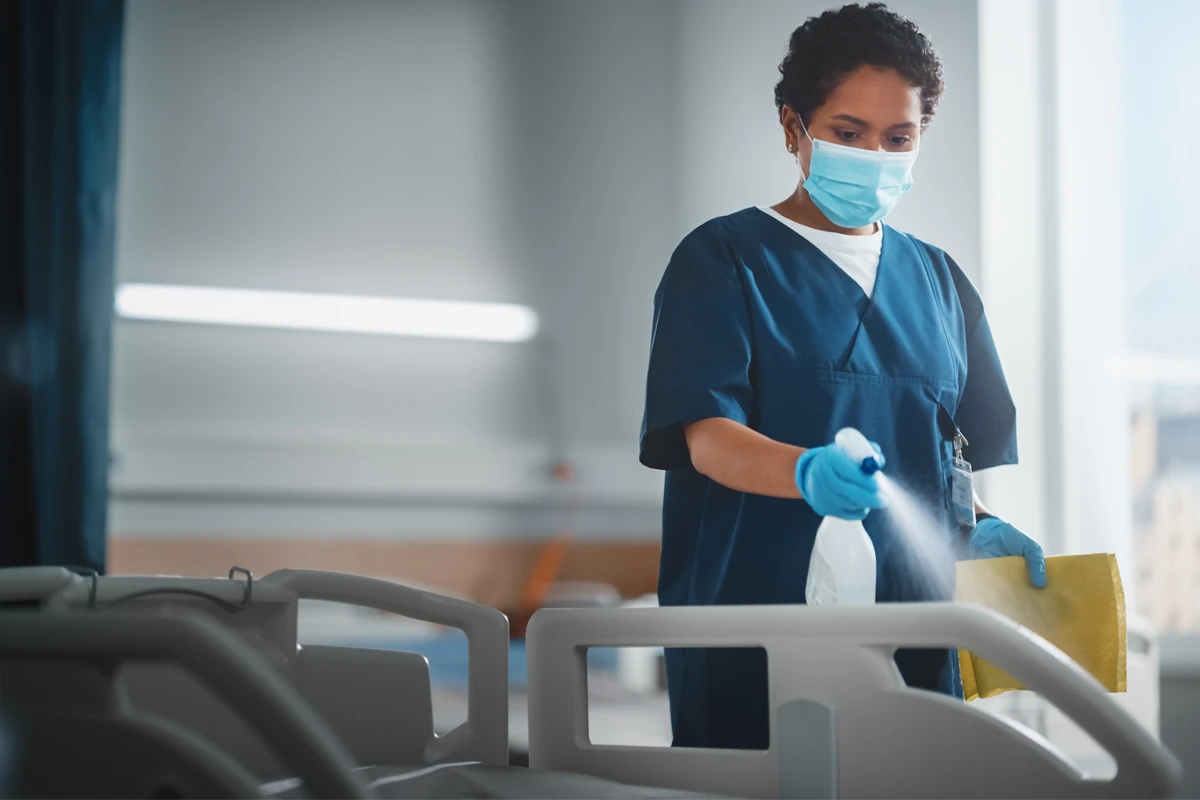
How is Hygiene Maintained in Patient Rooms?
A patient’s recovery process is directly related not only to the medical treatment they receive but also to the sterility of their environment. Hospital infections (nosocomial infections) are one of the greatest threats, prolonging the treatment process and posing a life-threatening risk. Therefore, hygiene in patient rooms should be approached as a professional infection control chain, beyond simple cleaning.
At Detrox, we have brought together the most effective methods and disinfection standards to guide healthcare professionals and patients’ families through this critical process.
Hand Hygiene: The First Step in Breaking the Infection Chain
Every individual entering a patient room (doctor, nurse, visitor) can play a key role in the transmission of microorganisms.
- Use of Antiseptics: Alcohol-based hand antiseptics such as Detro Derm, Detro Derm Soft 72% must be used before entering and after leaving the room.
- Five Indications Rule: As recommended by the WHO (World Health Organisation), hand hygiene must be performed before touching the patient, before aseptic procedures, after exposure to body fluids, after touching the patient, and after touching objects in the patient’s environment.
Disinfection of High-Touch Surfaces
The areas in the patient room where microbes are most concentrated are the “critical points” that are frequently touched. These surfaces should be disinfected at least twice daily and immediately if soiled:
- Bed Rails and Controls: These are the areas most frequently touched by the patient.
- Door Handles and Light Switches: These points, which are in constant contact, carry a risk of cross-contamination.
- IV Stands and Monitors: The surfaces of medical devices should be cleaned with disinfectants appropriate for the device’s sensitivity (e.g., alcohol-based rapid surface disinfectants).
Floor and General Area Cleaning
Floors in patient rooms are areas where dust and microorganisms settle.
- Cleaning Sequence: Cleaning should always be performed from “clean to dirty” (top to bottom).
- Correct Product Selection: In floor cleaning, broad-spectrum floor and surface disinfectants such as Detro San Floor should be used to ensure both cleaning and high-level disinfection at the same time.
Textile and Waste Management
- Sheets: Patient sheets should be collected without raising dust or shaking and transported in leak-proof bags.
- Medical Waste: Infected materials (dressing materials, syringes) must be disposed of in medical waste bins.
Turkish Ministry of Health and International Standards
Patient room hygiene practices are carried out in accordance with the Infection Control Regulation for Inpatient Healthcare Facilities and related guidelines published by the Turkish Ministry of Health. Detrox products are licensed as biocidal products by the Turkish Ministry of Health, and their production processes are carried out in accordance with international quality management standards such as ISO 9001 and ISO 13485. The products have been tested for their efficacy against specific microorganisms (bacteria, fungi, viruses, etc.) within the scope of the relevant standards.
Frequently Asked Questions (FAQ)
Question 1: Is household bleach sufficient for cleaning patient rooms? Answer: Although household bleach is effective against some microorganisms, it may be insufficient against resistant bacteria and device sensitivities in hospital environments. Its strong odour may also disturb patients. Therefore, odourless, broad-spectrum professional disinfectants produced to medical standards should be preferred.
Question 2: How often should disinfection be performed? Answer: High-contact surfaces should be disinfected at least 2-3 times a day. However, after the patient is discharged, during the process of preparing the room for the next patient (terminal cleaning), all surfaces, including the ceiling, should be thoroughly disinfected.
Question 3: Are spray disinfectants or wipes safer? Answer: In situations requiring rapid intervention, disinfectant wipes are more practical to prevent cross-contamination because a new wipe is used for each surface. Spray products, on the other hand, are more effective in large areas and hard-to-reach corners.
Question 4: How is air hygiene maintained in patient rooms? Answer: Regular ventilation of the room is a primary priority. In addition, appropriate filters (HEPA) should be used in central ventilation systems and, when necessary, professional devices that disinfect the ambient air or hydrogen peroxide-based cold fogging methods can be used.
Question 5: Is it inadvisable for the patient to be in the room when using disinfectants? Answer: If the product used is hospital-grade, low-volatility, and biodegradable (such as alcohol-free or controlled alcohol-containing products), surface wiping can be performed while the patient is in the room. However, the room must be evacuated during fogging or heavy chemical applications.